
Conference Schedule
Expand All +
Day 1 Online Workshops
Day 2 Online Workshops
Day 3 Plenaries
 11:10 - 12:10
Lessons from Spec-Driven Development
By Simon Martinelli Programming Architect, Martinelli LLCIn many projects, specifications and code drift apart over time. Requirements change, documentation becomes outdated, and developers rely mainly on the code. This increases risk and makes changes harder, especially in long-lived business applications.This talk presents a Spec-Driven Development approach in which system use cases are the central artifact. A system use case describes observable system behavior and acts as a stable contract for the application. Code is derived from these use cases instead of treating the code itself as the source of truth.
An AI agent is used as a supporting tool to generate and update code and tests from system use cases. The agent operates within a harness of skills, MCP servers, and guidelines. Through concrete examples, the session demonstrates how backend logic, database access, and UI behavior can evolve together while staying consistent with the use cases.
Finally, the session shares concrete workflows and lessons learned from real-world enterprise projects, including limitations and trade-offs of using AI in this way.
WhereVirtual- 12:10 - 13:30
Lunch Break and Expo Hall Visit
 13:30 - 14:30
How Software Development Methodologies Evolve with Your Product
By Calen Legaspi Founder, Chairman, Chief Scientist, Orange and Bronze Software LabsBuilding a startup MVP is fundamentally different from scaling a successful platform, maintaining a mature enterprise application, or modernizing a decades-old legacy system. Yet many organizations try to use the same software development methodology throughout their product's entire lifecycle. This talk explores how software development methodologies—including Lean Startup, Scrum, Extreme Programming (XP), Kanban, Disciplined Agile, DevOps, and even Waterfall—address different challenges at different stages of a product's evolution. We'll examine how factors such as business uncertainty, organizational scale, engineering maturity, and operational risk influence the most appropriate way of working. Rather than asking, "Which methodology is best?", participants will learn a practical framework for selecting and evolving development practices that fit their product, team, and organization.WhereVirtual 13:30 - 14:30
Engineering and Evaluating AI Agents that Perform in the Real World
By Joshua Arvin Lat Vice President of Cybersecurity and AI, AxosAI agents are becoming increasingly capable of reasoning, planning, and interacting with external tools, but moving from a successful prototype to a reliable production system remains a significant engineering challenge. This session explores practical techniques for engineering and evaluating AI agents that perform consistently in real-world environments.Discussion includes how to design agentic workflows, define meaningful evaluation metrics, and measure performance beyond simple accuracy. Topics include task completion, reasoning quality, tool selection, LLM-as-a-Judge, automated evaluation pipelines, human evaluation, regression testing, and production monitoring.
WhereVirtual- 13:30 - 15:30
Vibe Code Responsibly: How to Write Secure and Maintainable Software with Agentic AI
By Raphael Jambalos Head of Technology, eCloudValley PhilippinesThis session discusses the comparison of different agentic platforms and some best practices to making them effective.WhereVirtual - 14:40 - 15:40
Flaky, Fragile, and Forgotten: The Fall of a Test Automation Project
By Mesut Durukal QA Capabilities Leader, OMPFlaky, fragile, and forgotten tests can cripple delivery pipelines and frustrate teams. This session explores why test suites often degrade into poor states and how to prevent it. Through real code examples, we’ll highlight common anti‑patterns—like duplication, excessive abstraction, and suite dependencies—and show improved approaches that make tests more focused, maintainable, and reliable. Attendees will leave with practical strategies to build automation that accelerates delivery instead of blocking it.WhereVirtual - AI is already doing most of the work. Detecting flaky tests. Triaging bugs. Generating test scenarios. Writing incident summaries. So here's the uncomfortable question: what exactly are you doing?
This session isn't about whether AI will replace testers. That debate is boring. This is about what happens after AI takes over the routine work and whether you're building the skills that actually matter now.
Through real implementations (and a few experiments that failed badly), we'll look at where AI genuinely helps in quality engineering, where it quietly goes wrong, and why the humans who understand both will be the ones running the show.
Because AI doesn't think. It predicts. And there's a massive difference, especially when your production environment is on fire.
WhereVirtual  16:15 - 17:15
Beyond Every Commit: Securing What Comes Next
By Benjie Brian Zamora Chief Executive Officer, Sophie's Information Technology Inc.As software teams cross into the next horizon of AI-assisted development, cloud-native systems, automated pipelines, and faster release cycles, security must evolve beyond individual code fixes.This session explores how teams can move from secure coding to secure software delivery by embedding security into design, development, testing, deployment, and continuous improvement. Participants will learn practical approaches to secure-by-design thinking, automated security checks, dependency management, secrets protection, AI-generated code risks, and building a culture where security becomes part of everyday engineering decisions.
WhereVirtual 16:15 - 17:15
Don’t Build Your UI for AI Agents from Scratch: AG‑UI Is the Thing
By Seiji Villafranca Senior Engineer, KPNImplementing streams? Adding WebSockets to communicate with your agents? That’s one of the major challenges in connecting your UI to your created agents. But what if there were a universal adapter so you didn’t have to build those connections yourself?In this session, we will learn how to implement the AG‑UI protocol to easily connect UI apps with pre‑built agents. No matter what framework you used to build your agents, AG‑UI will handle the work for you!
WhereVirtual

 10:00 - 11:00
Breaking AI Coding Fatigue: Moving Past the "Vibe Check" to Spec-Driven Architecture
By Allan Mangune Software Development Manager, CatalisWe’ve all seen the flashy demos, but the reality of using AI agents in enterprise codebases is setting in: architectural drift, silent regressions, and a mountain of 'AI spaghetti code.' The industry is hitting collective AI coding fatigue. In this talk, we step away from the hype and look at the discipline.In this session, discover Spec-Driven Development (SDD)—a pragmatic methodology that shifts your role from writing raw syntax to engineering structured intent, using machine-readable specifications to force AI agents to respect your architectural guardrails.
WhereVirtual- 10:00 - 12:00
Fabric Data Transformer: Simplifying Data Preparation for the AI and Analytics Era
By Eugene Paden CTO, Ray Business TechnologiesAs organizations accelerate their adoption of AI, analytics, and modern data platforms, one challenge remains constant: transforming raw, fragmented, and inconsistent data into trusted, analytics-ready information. Data engineers and business users often spend a significant portion of their time cleaning, mapping, and preparing data before it can generate meaningful insights.This session introduces Fabric Data Transformer (FDT), a modern data transformation solution designed to streamline data preparation within the Microsoft Fabric ecosystem. FDT empowers organizations to simplify complex data transformation processes through intuitive, scalable, and efficient workflows, enabling faster delivery of analytics, reporting, and AI initiatives.
Participants will gain insights into the common challenges of data transformation, the role of Microsoft Fabric in modern data architectures, and how FDT helps bridge the gap between raw data and business value. The session will also showcase practical use cases, best practices, and real-world scenarios demonstrating how organizations can accelerate their data journey while reducing complexity, cost, and time-to-insight.
Whether you are a business leader, data professional, IT manager, or technology enthusiast, this talk will provide a practical understanding of how modern data transformation platforms can serve as a foundation for successful AI and data-driven decision-making.
By the end of the session, participants will be able to:
Understand the challenges of modern data preparation and transformation.
Appreciate the role of Microsoft Fabric in a unified data platform strategy.
Identify opportunities to improve data quality and analytics readiness.
Learn how Fabric Data Transformer simplifies data transformation workflows.
Explore practical applications of transformed data for reporting, business intelligence, and AI initiatives.WhereVirtual - 11:10 - 12:10
Bridging Game Development and Computer Vision for the Next Gen of PH Software
By Neil Patrick Del Gallego, Ph.D. Associate Professor / Chair, De La Salle UniversityIn the evolving landscape of interactive media, the line between simulation and reality is blurring. This talk explores the pioneering R&D project to be funded by DOST-PCIEERD, titled "GameDev x Computer Vision," where we attempt to apply game development techniques in the field of computer vision and AI.Beyond the project details, this session will share how our initiatives secured a government‑funded grant, showcasing a successful blueprint for collaboration between academia and industry—including both traditional software firms and game development studios—to push the boundaries of what’s possible in the local tech ecosystem.
WhereVirtual  11:10 - 12:10
Building the Future of AI Interfaces: Designing AI Experiences That Make Sense
By Vincent James Paz Sr. Principal Software Engineer, EmersonAI is evolving beyond simple chat experiences into intelligent systems that collaborate with humans. This session explores how to design the next generation of AI interfaces by combining voice interaction, visual context, dynamic widgets, and agent-driven experiences. Learn how to build AI experiences that feel natural, understandable, and aligned with how humans think, work, and interact with technology.WhereVirtual- 12:10 - 13:30
Lunch Break and Expo Hall Visit
- 13:30 - 14:30
Three Frameworks, One Protocol: An Empirical Study of Agentic AI Architectures for QA Intelligence Using LangGraph, CrewAI, AutoGen, and A2A
By Anthony Seumal PhD in Data Science Student, Asian Institute of ManagementChoosing an agentic AI framework is one of the most consequential architectural decisions a software team can make today. LangGraph, CrewAI, and AutoGen each promise to orchestrate intelligent agents, but their design philosophies diverge sharply. Most comparisons rely on toy examples and vendor documentation. This talk is different.This session presents empirical results from building the same production-grade QA intelligence system across all three frameworks, then connecting them through Google’s Agent-to-Agent (A2A) protocol. The system accepts a software feature specification and autonomously produces a risk register, a prioritized test strategy scored by a proprietary VRTQ framework, and executable Playwright test scaffolds. Every implementation is benchmarked across six dimensions: developer experience, architectural expressiveness, tool integration, observability, token efficiency, and failure behavior.
The talk then demonstrates cross-framework interoperability via A2A, wiring all three into a single pipeline. Attendees leave with a practical decision framework, benchmark data, and a working blueprint for building framework-agnostic agentic systems.
WhereVirtual - 13:30 - 14:30
If You Code It, They Will Come: Why Developers Should Start Building for Lawyers
By Maria Cecilia Soria Head, Privacy Regulatory and Incident Management, PLDTWhile engineers have automated much of the world, lawyers and corporate teams in the Philippines remain buried under flat PDFs and fragmented tracking systems. This session brings the perspective of “The Lawyer Tired of Manual Work,” turning everyday frustrations into actionable requirements for developers.We’ll break down the “Holy Trinity” of contract pain points—Review, Tracking, and Management—and show how LegalTech can move beyond generic AI applications to solutions that truly matter. Unlike the classic startup mistake of building first and hoping for adoption, in LegalTech the demand is clear: when developers build what domain experts ask for, the market follows.
With over 75,000 active lawyers and 578,000 SEC‑registered corporations in the Philippines alone, the opportunity is massive. This talk challenges developers to push past surface‑level automation and create tools that transform legal practice into something faster, smarter, and genuinely impactful.
WhereVirtual - The general trend in LLMs is toward ever larger systems, typically designed for hyperscalers. This talk takes the opposite approach—running local agentic AI on low‑end machines by tailoring solutions to the right tasks.WhereVirtual
- What does it take to build systems that continue to function when connectivity is unavailable?
Modern applications often assume reliable internet access and cloud infrastructure. This talk follows the speaker's ongoing exploration of local-first system architectures for disconnected and resource-constrained environments. This session will share experiments, design decisions, and lessons from exploring offline‑first, edge processing, and hardware‑aware systems.
WhereVirtual - 14:40 - 15:40
The Last Upgrade Isn’t Your Stack — It’s You
By Gian Santillan Chief Technology Officer, Digital Innoventures GroupAI agents are everywhere, but the real disruption isn’t the agent itself—it’s what they’re doing to us. As AI takes over repetitive coding tasks, a new role is emerging that can’t be automated away: the product engineer. This is not the death of engineering; it’s an upgrade.Product engineers still code, but they think in terms of outcomes, users, and business value. The ones who thrive won’t be those who wrote the most functions, but those who understood the why behind every feature they shipped.
This session explores how AI is reshaping the identity of engineers, why product‑driven thinking is becoming essential, and how developers can evolve from function writers to outcome shapers in the age of intelligent automation.
WhereVirtual - 16:15 - 17:15
Navigating the Grey: Scaling from Single Worker to Multi-VM Undetectable Scrapers
By Alpha Romer Coma Senior Data Engineer, ViableViewModern web scraping requires navigating strict bot defense systems like Akamai and reCAPTCHA. Extracting data reliably at scale demands an architecture that accurately mimics human behavior for automated problem resolution.This session outlines the technical requirements for building resilient, high throughput scraping pipelines capable of operating undetected overtime.
Technical Breakdown
- Architect Execution Pipelines: Evaluate Headless versus Headed Chrome with Xvfb, direct API endpoint requests, and extension-based scrapers. Implement stealth automation using frameworks like Playwright, Patchright, and curl_cffi.
- Browser Searching: Use locally hosted services like duckduckgo search and SearXNG to save on Google Search or Serper credits
- Bypass Automated Verification: Deploy audio processing pipelines using ffmpeg, Faster Whisper, and Google STT alongside visual models like CLIP to programmatically solve verification challenges.
- Extract High-Value Data: Leverage Optical Character Recognition (OCR) engines like PyMuPDF, Tesseract, and RapidOCR strictly for data extraction from documents and images.
- Manage Digital Identities: Configure residential proxy rotation, spoof granular browser fingerprints to execute session trust-building strategies.
- Orchestrate and Scale Behavior: Transition your architecture from a single worker to multi-threaded concurrency, and ultimately scale across multi-VM deployments.🏆 The Challenge
Data scraping often operates in a legally grey area. Explore this space practically by putting your new skills to the test on a special practice target website designed for you to tackle in your free time at the end of the session. Compete to see who can navigate the architecture, bypass the defenses, and retrieve the most complete information in the fastest time.WhereVirtual  16:15 - 17:15
Navigating by the Horizon: QA in the Age of Uncertainty
By Richmond Camero Lead Quality Automation Engineer, London Stock Exchange GroupFor decades, QA defined itself by certainty—pass or fail, green or red. But that line is shifting: AI has absorbed the rote work, roles now blur between tester, engineer, and coder, and our tools increasingly estimate rather than declare. For a profession built on certainty, this can feel like losing sight of land.This talk reframes that anxiety as a horizon—not a destination to reach, but a line to steer by—and argues that QA’s most durable skill was never the green checkmark, but adaptability. We’ll explore how uncertainty can be reframed as flexibility, and flexibility as navigation—so you leave not with a fixed map, but with a way to keep moving toward what’s next, even when the ground won’t hold still.
WhereVirtual
- We haven't found any session that matches you're criteria
Expand All +
Day 1 Online Workshops
Day 2 Online Workshops
Day 3 Plenaries
 11:10 - 12:10
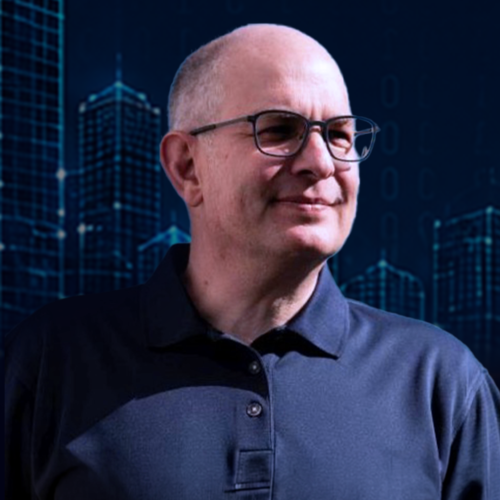
Lessons from Spec-Driven Development
By Simon Martinelli Programming Architect, Martinelli LLCIn many projects, specifications and code drift apart over time. Requirements change, documentation becomes outdated, and developers rely mainly on the code. This increases risk and makes changes harder, especially in long-lived business applications.This talk presents a Spec-Driven Development approach in which system use cases are the central artifact. A system use case describes observable system behavior and acts as a stable contract for the application. Code is derived from these use cases instead of treating the code itself as the source of truth.
An AI agent is used as a supporting tool to generate and update code and tests from system use cases. The agent operates within a harness of skills, MCP servers, and guidelines. Through concrete examples, the session demonstrates how backend logic, database access, and UI behavior can evolve together while staying consistent with the use cases.
Finally, the session shares concrete workflows and lessons learned from real-world enterprise projects, including limitations and trade-offs of using AI in this way.
WhereVirtual- 12:10 - 13:30
Lunch Break and Expo Hall Visit
 13:30 - 14:30
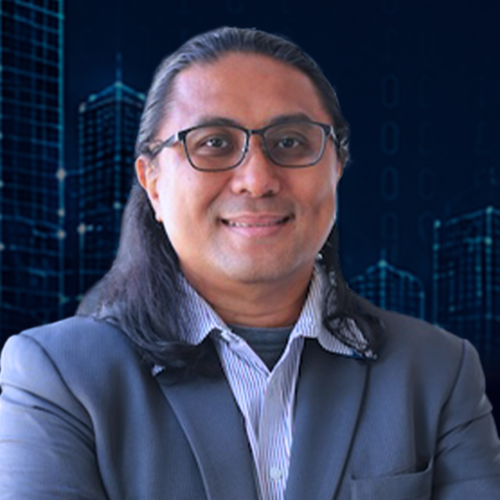
How Software Development Methodologies Evolve with Your Product
By Calen Legaspi Founder, Chairman, Chief Scientist, Orange and Bronze Software LabsBuilding a startup MVP is fundamentally different from scaling a successful platform, maintaining a mature enterprise application, or modernizing a decades-old legacy system. Yet many organizations try to use the same software development methodology throughout their product's entire lifecycle. This talk explores how software development methodologies—including Lean Startup, Scrum, Extreme Programming (XP), Kanban, Disciplined Agile, DevOps, and even Waterfall—address different challenges at different stages of a product's evolution. We'll examine how factors such as business uncertainty, organizational scale, engineering maturity, and operational risk influence the most appropriate way of working. Rather than asking, "Which methodology is best?", participants will learn a practical framework for selecting and evolving development practices that fit their product, team, and organization.WhereVirtual 13:30 - 14:30
Engineering and Evaluating AI Agents that Perform in the Real World
By Joshua Arvin Lat Vice President of Cybersecurity and AI, AxosAI agents are becoming increasingly capable of reasoning, planning, and interacting with external tools, but moving from a successful prototype to a reliable production system remains a significant engineering challenge. This session explores practical techniques for engineering and evaluating AI agents that perform consistently in real-world environments.Discussion includes how to design agentic workflows, define meaningful evaluation metrics, and measure performance beyond simple accuracy. Topics include task completion, reasoning quality, tool selection, LLM-as-a-Judge, automated evaluation pipelines, human evaluation, regression testing, and production monitoring.
WhereVirtual- 13:30 - 15:30
Vibe Code Responsibly: How to Write Secure and Maintainable Software with Agentic AI
By Raphael Jambalos Head of Technology, eCloudValley PhilippinesThis session discusses the comparison of different agentic platforms and some best practices to making them effective.WhereVirtual - 14:40 - 15:40
Flaky, Fragile, and Forgotten: The Fall of a Test Automation Project
By Mesut Durukal QA Capabilities Leader, OMPFlaky, fragile, and forgotten tests can cripple delivery pipelines and frustrate teams. This session explores why test suites often degrade into poor states and how to prevent it. Through real code examples, we’ll highlight common anti‑patterns—like duplication, excessive abstraction, and suite dependencies—and show improved approaches that make tests more focused, maintainable, and reliable. Attendees will leave with practical strategies to build automation that accelerates delivery instead of blocking it.WhereVirtual - AI is already doing most of the work. Detecting flaky tests. Triaging bugs. Generating test scenarios. Writing incident summaries. So here's the uncomfortable question: what exactly are you doing?
This session isn't about whether AI will replace testers. That debate is boring. This is about what happens after AI takes over the routine work and whether you're building the skills that actually matter now.
Through real implementations (and a few experiments that failed badly), we'll look at where AI genuinely helps in quality engineering, where it quietly goes wrong, and why the humans who understand both will be the ones running the show.
Because AI doesn't think. It predicts. And there's a massive difference, especially when your production environment is on fire.
WhereVirtual 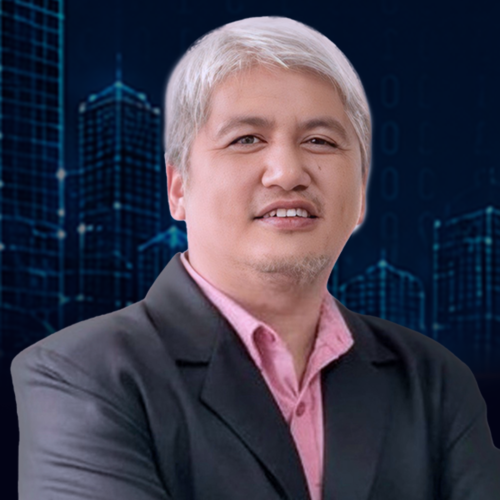 16:15 - 17:15
Beyond Every Commit: Securing What Comes Next
By Benjie Brian Zamora Chief Executive Officer, Sophie's Information Technology Inc.As software teams cross into the next horizon of AI-assisted development, cloud-native systems, automated pipelines, and faster release cycles, security must evolve beyond individual code fixes.This session explores how teams can move from secure coding to secure software delivery by embedding security into design, development, testing, deployment, and continuous improvement. Participants will learn practical approaches to secure-by-design thinking, automated security checks, dependency management, secrets protection, AI-generated code risks, and building a culture where security becomes part of everyday engineering decisions.
WhereVirtual 16:15 - 17:15
Don’t Build Your UI for AI Agents from Scratch: AG‑UI Is the Thing
By Seiji Villafranca Senior Engineer, KPNImplementing streams? Adding WebSockets to communicate with your agents? That’s one of the major challenges in connecting your UI to your created agents. But what if there were a universal adapter so you didn’t have to build those connections yourself?In this session, we will learn how to implement the AG‑UI protocol to easily connect UI apps with pre‑built agents. No matter what framework you used to build your agents, AG‑UI will handle the work for you!
WhereVirtual
 10:00 - 11:00
Breaking AI Coding Fatigue: Moving Past the "Vibe Check" to Spec-Driven Architecture
By Allan Mangune Software Development Manager, CatalisWe’ve all seen the flashy demos, but the reality of using AI agents in enterprise codebases is setting in: architectural drift, silent regressions, and a mountain of 'AI spaghetti code.' The industry is hitting collective AI coding fatigue. In this talk, we step away from the hype and look at the discipline.In this session, discover Spec-Driven Development (SDD)—a pragmatic methodology that shifts your role from writing raw syntax to engineering structured intent, using machine-readable specifications to force AI agents to respect your architectural guardrails.
WhereVirtual- 10:00 - 12:00
Fabric Data Transformer: Simplifying Data Preparation for the AI and Analytics Era
By Eugene Paden CTO, Ray Business TechnologiesAs organizations accelerate their adoption of AI, analytics, and modern data platforms, one challenge remains constant: transforming raw, fragmented, and inconsistent data into trusted, analytics-ready information. Data engineers and business users often spend a significant portion of their time cleaning, mapping, and preparing data before it can generate meaningful insights.This session introduces Fabric Data Transformer (FDT), a modern data transformation solution designed to streamline data preparation within the Microsoft Fabric ecosystem. FDT empowers organizations to simplify complex data transformation processes through intuitive, scalable, and efficient workflows, enabling faster delivery of analytics, reporting, and AI initiatives.
Participants will gain insights into the common challenges of data transformation, the role of Microsoft Fabric in modern data architectures, and how FDT helps bridge the gap between raw data and business value. The session will also showcase practical use cases, best practices, and real-world scenarios demonstrating how organizations can accelerate their data journey while reducing complexity, cost, and time-to-insight.
Whether you are a business leader, data professional, IT manager, or technology enthusiast, this talk will provide a practical understanding of how modern data transformation platforms can serve as a foundation for successful AI and data-driven decision-making.
By the end of the session, participants will be able to:
Understand the challenges of modern data preparation and transformation.
Appreciate the role of Microsoft Fabric in a unified data platform strategy.
Identify opportunities to improve data quality and analytics readiness.
Learn how Fabric Data Transformer simplifies data transformation workflows.
Explore practical applications of transformed data for reporting, business intelligence, and AI initiatives.WhereVirtual - 11:10 - 12:10
Bridging Game Development and Computer Vision for the Next Gen of PH Software
By Neil Patrick Del Gallego, Ph.D. Associate Professor / Chair, De La Salle UniversityIn the evolving landscape of interactive media, the line between simulation and reality is blurring. This talk explores the pioneering R&D project to be funded by DOST-PCIEERD, titled "GameDev x Computer Vision," where we attempt to apply game development techniques in the field of computer vision and AI.Beyond the project details, this session will share how our initiatives secured a government‑funded grant, showcasing a successful blueprint for collaboration between academia and industry—including both traditional software firms and game development studios—to push the boundaries of what’s possible in the local tech ecosystem.
WhereVirtual  11:10 - 12:10
Building the Future of AI Interfaces: Designing AI Experiences That Make Sense
By Vincent James Paz Sr. Principal Software Engineer, EmersonAI is evolving beyond simple chat experiences into intelligent systems that collaborate with humans. This session explores how to design the next generation of AI interfaces by combining voice interaction, visual context, dynamic widgets, and agent-driven experiences. Learn how to build AI experiences that feel natural, understandable, and aligned with how humans think, work, and interact with technology.WhereVirtual- 12:10 - 13:30
Lunch Break and Expo Hall Visit
- 13:30 - 14:30
Three Frameworks, One Protocol: An Empirical Study of Agentic AI Architectures for QA Intelligence Using LangGraph, CrewAI, AutoGen, and A2A
By Anthony Seumal PhD in Data Science Student, Asian Institute of ManagementChoosing an agentic AI framework is one of the most consequential architectural decisions a software team can make today. LangGraph, CrewAI, and AutoGen each promise to orchestrate intelligent agents, but their design philosophies diverge sharply. Most comparisons rely on toy examples and vendor documentation. This talk is different.This session presents empirical results from building the same production-grade QA intelligence system across all three frameworks, then connecting them through Google’s Agent-to-Agent (A2A) protocol. The system accepts a software feature specification and autonomously produces a risk register, a prioritized test strategy scored by a proprietary VRTQ framework, and executable Playwright test scaffolds. Every implementation is benchmarked across six dimensions: developer experience, architectural expressiveness, tool integration, observability, token efficiency, and failure behavior.
The talk then demonstrates cross-framework interoperability via A2A, wiring all three into a single pipeline. Attendees leave with a practical decision framework, benchmark data, and a working blueprint for building framework-agnostic agentic systems.
WhereVirtual - 13:30 - 14:30
If You Code It, They Will Come: Why Developers Should Start Building for Lawyers
By Maria Cecilia Soria Head, Privacy Regulatory and Incident Management, PLDTWhile engineers have automated much of the world, lawyers and corporate teams in the Philippines remain buried under flat PDFs and fragmented tracking systems. This session brings the perspective of “The Lawyer Tired of Manual Work,” turning everyday frustrations into actionable requirements for developers.We’ll break down the “Holy Trinity” of contract pain points—Review, Tracking, and Management—and show how LegalTech can move beyond generic AI applications to solutions that truly matter. Unlike the classic startup mistake of building first and hoping for adoption, in LegalTech the demand is clear: when developers build what domain experts ask for, the market follows.
With over 75,000 active lawyers and 578,000 SEC‑registered corporations in the Philippines alone, the opportunity is massive. This talk challenges developers to push past surface‑level automation and create tools that transform legal practice into something faster, smarter, and genuinely impactful.
WhereVirtual - The general trend in LLMs is toward ever larger systems, typically designed for hyperscalers. This talk takes the opposite approach—running local agentic AI on low‑end machines by tailoring solutions to the right tasks.WhereVirtual
- What does it take to build systems that continue to function when connectivity is unavailable?
Modern applications often assume reliable internet access and cloud infrastructure. This talk follows the speaker's ongoing exploration of local-first system architectures for disconnected and resource-constrained environments. This session will share experiments, design decisions, and lessons from exploring offline‑first, edge processing, and hardware‑aware systems.
WhereVirtual - 14:40 - 15:40
The Last Upgrade Isn’t Your Stack — It’s You
By Gian Santillan Chief Technology Officer, Digital Innoventures GroupAI agents are everywhere, but the real disruption isn’t the agent itself—it’s what they’re doing to us. As AI takes over repetitive coding tasks, a new role is emerging that can’t be automated away: the product engineer. This is not the death of engineering; it’s an upgrade.Product engineers still code, but they think in terms of outcomes, users, and business value. The ones who thrive won’t be those who wrote the most functions, but those who understood the why behind every feature they shipped.
This session explores how AI is reshaping the identity of engineers, why product‑driven thinking is becoming essential, and how developers can evolve from function writers to outcome shapers in the age of intelligent automation.
WhereVirtual - 16:15 - 17:15
Navigating the Grey: Scaling from Single Worker to Multi-VM Undetectable Scrapers
By Alpha Romer Coma Senior Data Engineer, ViableViewModern web scraping requires navigating strict bot defense systems like Akamai and reCAPTCHA. Extracting data reliably at scale demands an architecture that accurately mimics human behavior for automated problem resolution.This session outlines the technical requirements for building resilient, high throughput scraping pipelines capable of operating undetected overtime.
Technical Breakdown
- Architect Execution Pipelines: Evaluate Headless versus Headed Chrome with Xvfb, direct API endpoint requests, and extension-based scrapers. Implement stealth automation using frameworks like Playwright, Patchright, and curl_cffi.
- Browser Searching: Use locally hosted services like duckduckgo search and SearXNG to save on Google Search or Serper credits
- Bypass Automated Verification: Deploy audio processing pipelines using ffmpeg, Faster Whisper, and Google STT alongside visual models like CLIP to programmatically solve verification challenges.
- Extract High-Value Data: Leverage Optical Character Recognition (OCR) engines like PyMuPDF, Tesseract, and RapidOCR strictly for data extraction from documents and images.
- Manage Digital Identities: Configure residential proxy rotation, spoof granular browser fingerprints to execute session trust-building strategies.
- Orchestrate and Scale Behavior: Transition your architecture from a single worker to multi-threaded concurrency, and ultimately scale across multi-VM deployments.🏆 The Challenge
Data scraping often operates in a legally grey area. Explore this space practically by putting your new skills to the test on a special practice target website designed for you to tackle in your free time at the end of the session. Compete to see who can navigate the architecture, bypass the defenses, and retrieve the most complete information in the fastest time.WhereVirtual  16:15 - 17:15
Navigating by the Horizon: QA in the Age of Uncertainty
By Richmond Camero Lead Quality Automation Engineer, London Stock Exchange GroupFor decades, QA defined itself by certainty—pass or fail, green or red. But that line is shifting: AI has absorbed the rote work, roles now blur between tester, engineer, and coder, and our tools increasingly estimate rather than declare. For a profession built on certainty, this can feel like losing sight of land.This talk reframes that anxiety as a horizon—not a destination to reach, but a line to steer by—and argues that QA’s most durable skill was never the green checkmark, but adaptability. We’ll explore how uncertainty can be reframed as flexibility, and flexibility as navigation—so you leave not with a fixed map, but with a way to keep moving toward what’s next, even when the ground won’t hold still.
WhereVirtual
- We haven't found any session that matches you're criteria
Expand All +
Day 1 Online Workshops
Day 2 Online Workshops
Day 3 Plenaries
- 11:10 - 12:10
Lessons from Spec-Driven Development
By Simon Martinelli Programming Architect, Martinelli LLCIn many projects, specifications and code drift apart over time. Requirements change, documentation becomes outdated, and developers rely mainly on the code. This increases risk and makes changes harder, especially in long-lived business applications.This talk presents a Spec-Driven Development approach in which system use cases are the central artifact. A system use case describes observable system behavior and acts as a stable contract for the application. Code is derived from these use cases instead of treating the code itself as the source of truth.
An AI agent is used as a supporting tool to generate and update code and tests from system use cases. The agent operates within a harness of skills, MCP servers, and guidelines. Through concrete examples, the session demonstrates how backend logic, database access, and UI behavior can evolve together while staying consistent with the use cases.
Finally, the session shares concrete workflows and lessons learned from real-world enterprise projects, including limitations and trade-offs of using AI in this way.
WhereVirtual - 12:10 - 13:30
Lunch Break and Expo Hall Visit
- 13:30 - 14:30
How Software Development Methodologies Evolve with Your Product
By Calen Legaspi Founder, Chairman, Chief Scientist, Orange and Bronze Software LabsBuilding a startup MVP is fundamentally different from scaling a successful platform, maintaining a mature enterprise application, or modernizing a decades-old legacy system. Yet many organizations try to use the same software development methodology throughout their product's entire lifecycle. This talk explores how software development methodologies—including Lean Startup, Scrum, Extreme Programming (XP), Kanban, Disciplined Agile, DevOps, and even Waterfall—address different challenges at different stages of a product's evolution. We'll examine how factors such as business uncertainty, organizational scale, engineering maturity, and operational risk influence the most appropriate way of working. Rather than asking, "Which methodology is best?", participants will learn a practical framework for selecting and evolving development practices that fit their product, team, and organization.WhereVirtual - 13:30 - 14:30
Engineering and Evaluating AI Agents that Perform in the Real World
By Joshua Arvin Lat Vice President of Cybersecurity and AI, AxosAI agents are becoming increasingly capable of reasoning, planning, and interacting with external tools, but moving from a successful prototype to a reliable production system remains a significant engineering challenge. This session explores practical techniques for engineering and evaluating AI agents that perform consistently in real-world environments.Discussion includes how to design agentic workflows, define meaningful evaluation metrics, and measure performance beyond simple accuracy. Topics include task completion, reasoning quality, tool selection, LLM-as-a-Judge, automated evaluation pipelines, human evaluation, regression testing, and production monitoring.
WhereVirtual - 13:30 - 15:30
Vibe Code Responsibly: How to Write Secure and Maintainable Software with Agentic AI
By Raphael Jambalos Head of Technology, eCloudValley PhilippinesThis session discusses the comparison of different agentic platforms and some best practices to making them effective.WhereVirtual - 14:40 - 15:40
Flaky, Fragile, and Forgotten: The Fall of a Test Automation Project
By Mesut Durukal QA Capabilities Leader, OMPFlaky, fragile, and forgotten tests can cripple delivery pipelines and frustrate teams. This session explores why test suites often degrade into poor states and how to prevent it. Through real code examples, we’ll highlight common anti‑patterns—like duplication, excessive abstraction, and suite dependencies—and show improved approaches that make tests more focused, maintainable, and reliable. Attendees will leave with practical strategies to build automation that accelerates delivery instead of blocking it.WhereVirtual - AI is already doing most of the work. Detecting flaky tests. Triaging bugs. Generating test scenarios. Writing incident summaries. So here's the uncomfortable question: what exactly are you doing?
This session isn't about whether AI will replace testers. That debate is boring. This is about what happens after AI takes over the routine work and whether you're building the skills that actually matter now.
Through real implementations (and a few experiments that failed badly), we'll look at where AI genuinely helps in quality engineering, where it quietly goes wrong, and why the humans who understand both will be the ones running the show.
Because AI doesn't think. It predicts. And there's a massive difference, especially when your production environment is on fire.
WhereVirtual - 16:15 - 17:15
Beyond Every Commit: Securing What Comes Next
By Benjie Brian Zamora Chief Executive Officer, Sophie's Information Technology Inc.As software teams cross into the next horizon of AI-assisted development, cloud-native systems, automated pipelines, and faster release cycles, security must evolve beyond individual code fixes.This session explores how teams can move from secure coding to secure software delivery by embedding security into design, development, testing, deployment, and continuous improvement. Participants will learn practical approaches to secure-by-design thinking, automated security checks, dependency management, secrets protection, AI-generated code risks, and building a culture where security becomes part of everyday engineering decisions.
WhereVirtual - 16:15 - 17:15
Don’t Build Your UI for AI Agents from Scratch: AG‑UI Is the Thing
By Seiji Villafranca Senior Engineer, KPNImplementing streams? Adding WebSockets to communicate with your agents? That’s one of the major challenges in connecting your UI to your created agents. But what if there were a universal adapter so you didn’t have to build those connections yourself?In this session, we will learn how to implement the AG‑UI protocol to easily connect UI apps with pre‑built agents. No matter what framework you used to build your agents, AG‑UI will handle the work for you!
WhereVirtual
- 10:00 - 11:00
Breaking AI Coding Fatigue: Moving Past the "Vibe Check" to Spec-Driven Architecture
By Allan Mangune Software Development Manager, CatalisWe’ve all seen the flashy demos, but the reality of using AI agents in enterprise codebases is setting in: architectural drift, silent regressions, and a mountain of 'AI spaghetti code.' The industry is hitting collective AI coding fatigue. In this talk, we step away from the hype and look at the discipline.In this session, discover Spec-Driven Development (SDD)—a pragmatic methodology that shifts your role from writing raw syntax to engineering structured intent, using machine-readable specifications to force AI agents to respect your architectural guardrails.
WhereVirtual - 10:00 - 12:00
Fabric Data Transformer: Simplifying Data Preparation for the AI and Analytics Era
By Eugene Paden CTO, Ray Business TechnologiesAs organizations accelerate their adoption of AI, analytics, and modern data platforms, one challenge remains constant: transforming raw, fragmented, and inconsistent data into trusted, analytics-ready information. Data engineers and business users often spend a significant portion of their time cleaning, mapping, and preparing data before it can generate meaningful insights.This session introduces Fabric Data Transformer (FDT), a modern data transformation solution designed to streamline data preparation within the Microsoft Fabric ecosystem. FDT empowers organizations to simplify complex data transformation processes through intuitive, scalable, and efficient workflows, enabling faster delivery of analytics, reporting, and AI initiatives.
Participants will gain insights into the common challenges of data transformation, the role of Microsoft Fabric in modern data architectures, and how FDT helps bridge the gap between raw data and business value. The session will also showcase practical use cases, best practices, and real-world scenarios demonstrating how organizations can accelerate their data journey while reducing complexity, cost, and time-to-insight.
Whether you are a business leader, data professional, IT manager, or technology enthusiast, this talk will provide a practical understanding of how modern data transformation platforms can serve as a foundation for successful AI and data-driven decision-making.
By the end of the session, participants will be able to:
Understand the challenges of modern data preparation and transformation.
Appreciate the role of Microsoft Fabric in a unified data platform strategy.
Identify opportunities to improve data quality and analytics readiness.
Learn how Fabric Data Transformer simplifies data transformation workflows.
Explore practical applications of transformed data for reporting, business intelligence, and AI initiatives.WhereVirtual - 11:10 - 12:10
Bridging Game Development and Computer Vision for the Next Gen of PH Software
By Neil Patrick Del Gallego, Ph.D. Associate Professor / Chair, De La Salle UniversityIn the evolving landscape of interactive media, the line between simulation and reality is blurring. This talk explores the pioneering R&D project to be funded by DOST-PCIEERD, titled "GameDev x Computer Vision," where we attempt to apply game development techniques in the field of computer vision and AI.Beyond the project details, this session will share how our initiatives secured a government‑funded grant, showcasing a successful blueprint for collaboration between academia and industry—including both traditional software firms and game development studios—to push the boundaries of what’s possible in the local tech ecosystem.
WhereVirtual - 11:10 - 12:10
Building the Future of AI Interfaces: Designing AI Experiences That Make Sense
By Vincent James Paz Sr. Principal Software Engineer, EmersonAI is evolving beyond simple chat experiences into intelligent systems that collaborate with humans. This session explores how to design the next generation of AI interfaces by combining voice interaction, visual context, dynamic widgets, and agent-driven experiences. Learn how to build AI experiences that feel natural, understandable, and aligned with how humans think, work, and interact with technology.WhereVirtual - 12:10 - 13:30
Lunch Break and Expo Hall Visit
- 13:30 - 14:30
Three Frameworks, One Protocol: An Empirical Study of Agentic AI Architectures for QA Intelligence Using LangGraph, CrewAI, AutoGen, and A2A
By Anthony Seumal PhD in Data Science Student, Asian Institute of ManagementChoosing an agentic AI framework is one of the most consequential architectural decisions a software team can make today. LangGraph, CrewAI, and AutoGen each promise to orchestrate intelligent agents, but their design philosophies diverge sharply. Most comparisons rely on toy examples and vendor documentation. This talk is different.This session presents empirical results from building the same production-grade QA intelligence system across all three frameworks, then connecting them through Google’s Agent-to-Agent (A2A) protocol. The system accepts a software feature specification and autonomously produces a risk register, a prioritized test strategy scored by a proprietary VRTQ framework, and executable Playwright test scaffolds. Every implementation is benchmarked across six dimensions: developer experience, architectural expressiveness, tool integration, observability, token efficiency, and failure behavior.
The talk then demonstrates cross-framework interoperability via A2A, wiring all three into a single pipeline. Attendees leave with a practical decision framework, benchmark data, and a working blueprint for building framework-agnostic agentic systems.
WhereVirtual - 13:30 - 14:30
If You Code It, They Will Come: Why Developers Should Start Building for Lawyers
By Maria Cecilia Soria Head, Privacy Regulatory and Incident Management, PLDTWhile engineers have automated much of the world, lawyers and corporate teams in the Philippines remain buried under flat PDFs and fragmented tracking systems. This session brings the perspective of “The Lawyer Tired of Manual Work,” turning everyday frustrations into actionable requirements for developers.We’ll break down the “Holy Trinity” of contract pain points—Review, Tracking, and Management—and show how LegalTech can move beyond generic AI applications to solutions that truly matter. Unlike the classic startup mistake of building first and hoping for adoption, in LegalTech the demand is clear: when developers build what domain experts ask for, the market follows.
With over 75,000 active lawyers and 578,000 SEC‑registered corporations in the Philippines alone, the opportunity is massive. This talk challenges developers to push past surface‑level automation and create tools that transform legal practice into something faster, smarter, and genuinely impactful.
WhereVirtual - The general trend in LLMs is toward ever larger systems, typically designed for hyperscalers. This talk takes the opposite approach—running local agentic AI on low‑end machines by tailoring solutions to the right tasks.WhereVirtual
- What does it take to build systems that continue to function when connectivity is unavailable?
Modern applications often assume reliable internet access and cloud infrastructure. This talk follows the speaker's ongoing exploration of local-first system architectures for disconnected and resource-constrained environments. This session will share experiments, design decisions, and lessons from exploring offline‑first, edge processing, and hardware‑aware systems.
WhereVirtual - 14:40 - 15:40
The Last Upgrade Isn’t Your Stack — It’s You
By Gian Santillan Chief Technology Officer, Digital Innoventures GroupAI agents are everywhere, but the real disruption isn’t the agent itself—it’s what they’re doing to us. As AI takes over repetitive coding tasks, a new role is emerging that can’t be automated away: the product engineer. This is not the death of engineering; it’s an upgrade.Product engineers still code, but they think in terms of outcomes, users, and business value. The ones who thrive won’t be those who wrote the most functions, but those who understood the why behind every feature they shipped.
This session explores how AI is reshaping the identity of engineers, why product‑driven thinking is becoming essential, and how developers can evolve from function writers to outcome shapers in the age of intelligent automation.
WhereVirtual - 16:15 - 17:15
Navigating the Grey: Scaling from Single Worker to Multi-VM Undetectable Scrapers
By Alpha Romer Coma Senior Data Engineer, ViableViewModern web scraping requires navigating strict bot defense systems like Akamai and reCAPTCHA. Extracting data reliably at scale demands an architecture that accurately mimics human behavior for automated problem resolution.This session outlines the technical requirements for building resilient, high throughput scraping pipelines capable of operating undetected overtime.
Technical Breakdown
- Architect Execution Pipelines: Evaluate Headless versus Headed Chrome with Xvfb, direct API endpoint requests, and extension-based scrapers. Implement stealth automation using frameworks like Playwright, Patchright, and curl_cffi.
- Browser Searching: Use locally hosted services like duckduckgo search and SearXNG to save on Google Search or Serper credits
- Bypass Automated Verification: Deploy audio processing pipelines using ffmpeg, Faster Whisper, and Google STT alongside visual models like CLIP to programmatically solve verification challenges.
- Extract High-Value Data: Leverage Optical Character Recognition (OCR) engines like PyMuPDF, Tesseract, and RapidOCR strictly for data extraction from documents and images.
- Manage Digital Identities: Configure residential proxy rotation, spoof granular browser fingerprints to execute session trust-building strategies.
- Orchestrate and Scale Behavior: Transition your architecture from a single worker to multi-threaded concurrency, and ultimately scale across multi-VM deployments.🏆 The Challenge
Data scraping often operates in a legally grey area. Explore this space practically by putting your new skills to the test on a special practice target website designed for you to tackle in your free time at the end of the session. Compete to see who can navigate the architecture, bypass the defenses, and retrieve the most complete information in the fastest time.WhereVirtual - 16:15 - 17:15
Navigating by the Horizon: QA in the Age of Uncertainty
By Richmond Camero Lead Quality Automation Engineer, London Stock Exchange GroupFor decades, QA defined itself by certainty—pass or fail, green or red. But that line is shifting: AI has absorbed the rote work, roles now blur between tester, engineer, and coder, and our tools increasingly estimate rather than declare. For a profession built on certainty, this can feel like losing sight of land.This talk reframes that anxiety as a horizon—not a destination to reach, but a line to steer by—and argues that QA’s most durable skill was never the green checkmark, but adaptability. We’ll explore how uncertainty can be reframed as flexibility, and flexibility as navigation—so you leave not with a fixed map, but with a way to keep moving toward what’s next, even when the ground won’t hold still.
WhereVirtual
- We haven't found any session that matches you're criteria
Stay Tunes with daily stories

© SOFTCON 2026 is the flagship event of the Philippine Software Industry Association and organized by Brand Stage.